
Get the Best Blast Mitigation Coating Protection in UAE
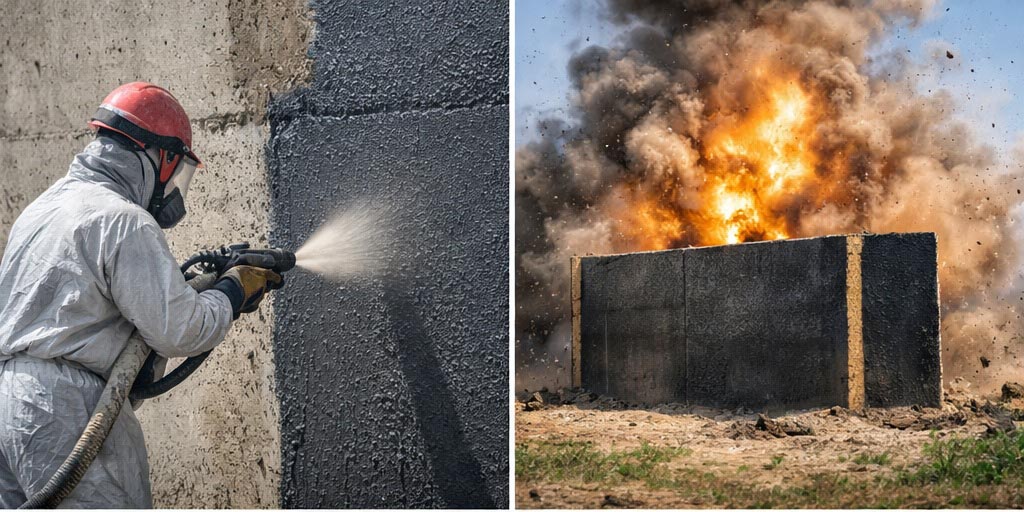
Blast mitigation coatings are advanced protective solutions designed to strengthen structures, vehicles, and equipment against the impact of explosions. Applied directly onto surfaces, they serve as a protective shield that helps reduce damage from blast pressures. These coatings are typically formulated using high-performance polyurea and polyurethane elastomers, enabling spray application over a wide variety of substrates such as concrete, steel, wood, masonry, and composite materials.
In the event of a blast, the sudden release of energy creates extreme pressure waves capable of cracking walls, dislodging materials, and generating dangerous debris. Blast mitigation coatings help counter this effect by distributing the force over a larger area, reducing stress concentration on the substrate. This behavior helps maintain the integrity of the structure and significantly lowers the risk of fragmentation that can cause injury or further damage.
What makes these coatings effective is their unique combination of mechanical properties. They offer high tensile strength to withstand intense forces, along with exceptional flexibility that allows them to stretch without failure. Strong bonding to the underlying surface ensures materials remain contained, while fast curing enables rapid installation and minimal downtime. Additionally, their resistance to chemicals, weathering, and corrosion supports long-term performance in harsh operating conditions.
What is Blast Mitigation Coating?
Blast mitigation coating refers to a specialized protective layer designed to reduce the destructive effects of explosions on structures and surfaces.
It does not prevent an explosion instead, it controls how the structure reacts to it.
This includes:
- Reducing shockwave impact on surfaces
- Preventing material fragmentation
- Containing debris within the structure
- Minimizing structural failure
In environments across UAE, Abu Dhabi, and Dubai, where safety and infrastructure protection are critical, blast mitigation coatings are increasingly considered as part of modern design and retrofit strategies.
How Blast Mitigation Coatings Work
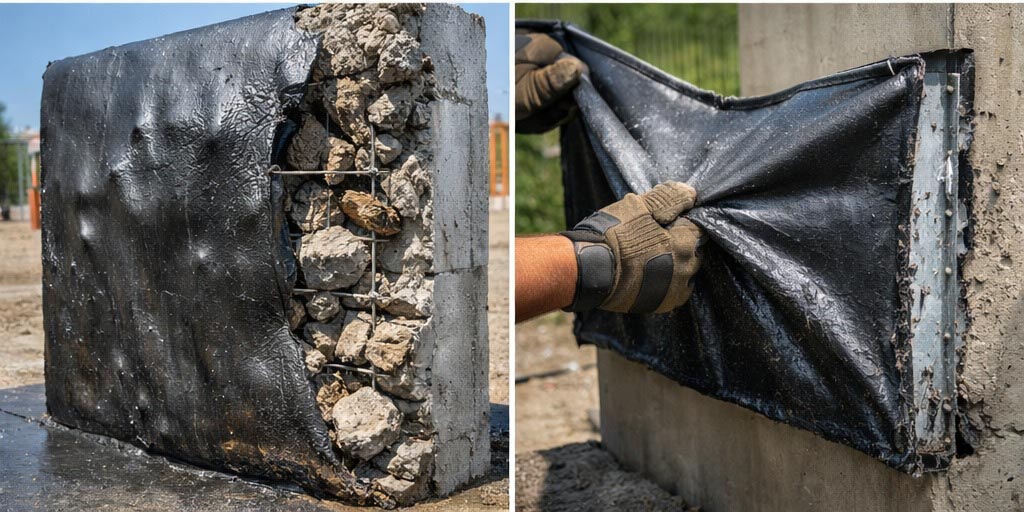
The performance of blast mitigation coatings is based on how they respond under extreme stress.
When an explosion occurs:
- A high-pressure shockwave impacts the surface
- The underlying material begins to crack or weaken
- The coating stretches and absorbs part of the energy
- Fragments are held together instead of dispersing
- Damage is reduced and more controlled
This ability to absorb, redistribute, and contain energy is what makes these coatings effective in real-world conditions.
Key Benefits of Blast Mitigation Coatings
- Helps reduce structural damage during explosive events
- Minimizes risk of flying debris and secondary damage
- Maintains surface integrity under high-pressure impact
- Suitable for both new construction and retrofit projects
- Fast curing enables quick project turnaround
- Performs reliably in harsh UAE environmental conditions
Technical Performance of Blast Mitigation Coatings
While performance varies depending on system design and formulation, most blast mitigation coatings offer the following characteristics:
| Property | Typical Range |
| Tensile Strength | High (varies by system) |
| Elongation | 300% – 800% |
| Adhesion Strength | Strong across multiple substrates |
| Cure Time | Seconds to minutes |
| Impact Resistance | High |
| Environmental Resistance | Excellent |
These properties allow the coating to respond dynamically under stress, rather than failing in a brittle manner.
Where Blast Mitigation Coatings are Used in UAE
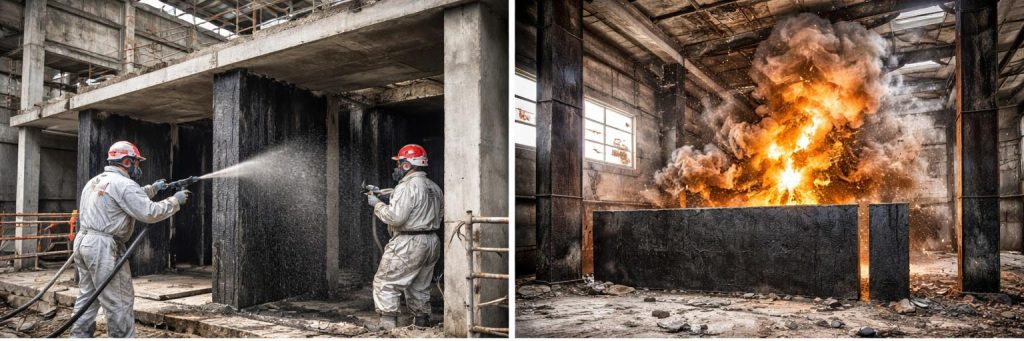
Blast mitigation coatings are applied across different sectors depending on risk level and operational requirements.
Oil & Gas and Industrial Facilities
- Refineries and processing plants
- Storage tanks and containment areas
- Pipeline infrastructure
- Chemical processing units
These environments often involve pressure systems and hazardous materials where controlling structural damage is critical.
Infrastructure and Public Projects
- Airports and transport terminals
- Bridges, tunnels, and utility structures
- Government buildings
Here, the focus is on public safety and maintaining operational continuity.
High-Security and Controlled Facilities
- Defense and military installations
- Storage for sensitive or hazardous materials
- Restricted access facilities
In these cases, maintaining structural integrity during unexpected events becomes essential.
Commercial and Critical Operations
- Data centers
- Power plants and utility stations
- Large-scale industrial facilities
Even where risk is lower, the impact of damage can result in major operational losses.
Blast Mitigation Coating vs Traditional Protection Methods
| Feature | Blast Mitigation Coatings | Conventional Systems |
| Flexibility | High | Low |
| Energy Absorption | Effective | Limited |
| Fragment Containment | Yes | No |
| Application Speed | Fast | Slower |
| Suitability for Retrofit | Yes | Limited |
Traditional systems often rely on rigidity, whereas blast mitigation coatings focus on controlled response and energy absorption.
Our Blast Mitigation Coating Approach
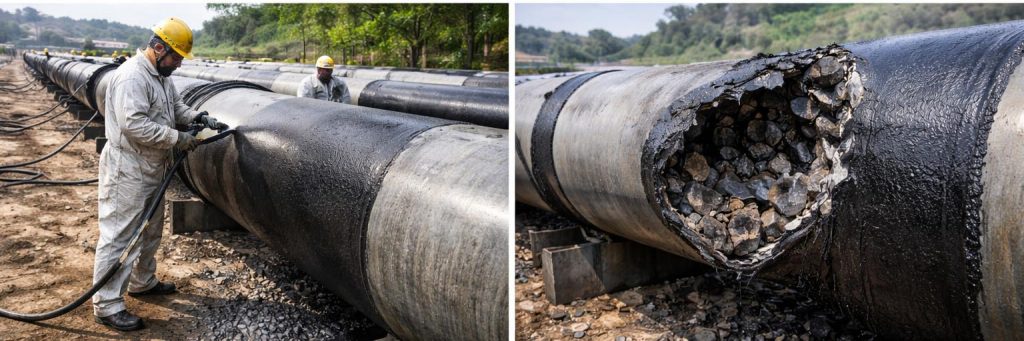
Each project is evaluated based on its risk profile, structure type, and operational requirements.
Our process includes:
- Site and surface assessment
- Selection of suitable coating system
- Surface preparation for proper adhesion
- Controlled spray application
- Thickness planning based on protection needs
- Final inspection and quality verification
The objective is not just to apply a coating, but to ensure it performs effectively under real conditions.
Why Choose Us for Blast Mitigation Coating in UAE
- Experience in high-risk industrial and infrastructure environments
- Application expertise across Abu Dhabi, Dubai, and the UAE
- Use of advanced coating systems suited for blast mitigation
- Focus on performance, not just application
- Solutions tailored to project-specific safety requirements
Frequently Asked Questions (FAQs)
1. What is blast mitigation coating?
It is a protective coating designed to reduce the impact of explosions by absorbing energy and preventing structural fragmentation.
2. Can blast mitigation coatings stop an explosion?
No. They do not prevent explosions but help reduce damage and improve safety.
3. Can these coatings be applied to existing structures?
Yes, they are commonly used in retrofit applications to improve protection.
4. Where are blast mitigation coatings commonly used?
They are used in oil & gas facilities, defense installations, infrastructure projects, and high-risk industrial environments.
5. How long do blast mitigation coatings last?
With proper application, they can perform effectively for many years depending on conditions
Blast Mitigation Coating for Safer Infrastructure
As infrastructure continues to develop across Dubai, Abu Dhabi, and the UAE, there is an increasing focus on safety and resilience. Blast mitigation & polyurea coatings provide a practical way to reduce structural damage and improve protection without major design changes.
By combining flexibility, strength, and adaptability, these coatings play an important role in modern protection systems where performance under stress is critical.
Looking for Blast Mitigation Coating Services in UAE?
If your project requires enhanced structural protection or involves high-risk environments, selecting the right coating system is essential.
Get in touch to evaluate your requirements and identify the most suitable blast mitigation solution for your application.