
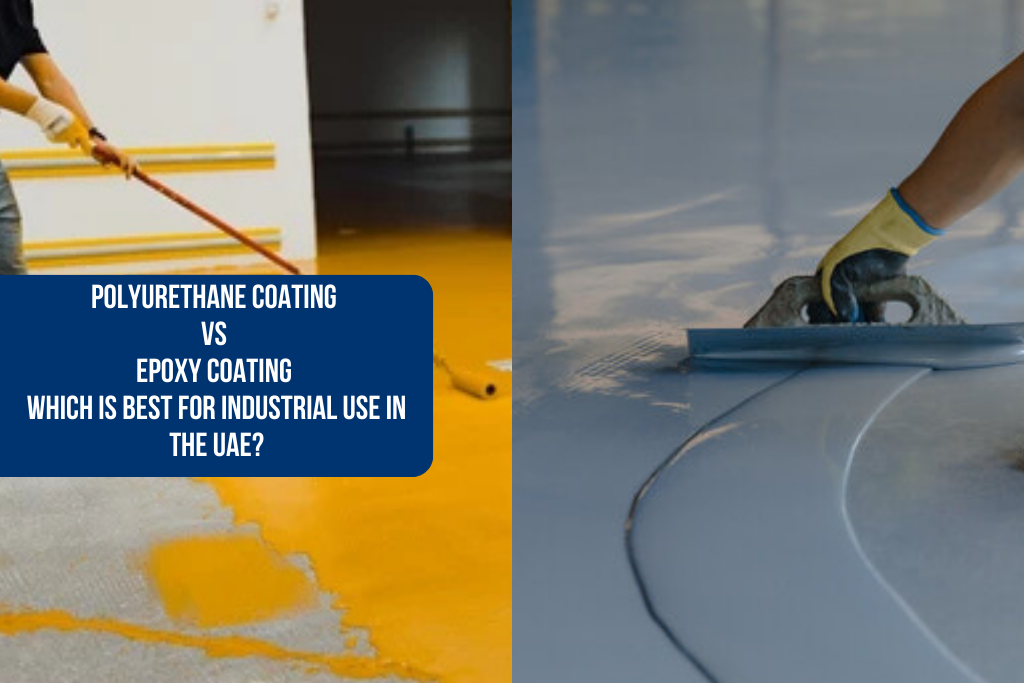
Choosing the right industrial coating can influence everything-from equipment life and safety to downtime and long-term maintenance costs. In the UAE, where high temperatures, sandstorms, and humidity can rapidly deteriorate surfaces, selecting between polyurethane coating and epoxy coating becomes even more critical.
This guide breaks down the key differences, performance factors, and UAE-specific considerations so businesses can make a confident, informed choice.
Why Coating Choice Matters in the UAE
Industrial facilities across Dubai, Abu Dhabi, Sharjah, and the Northern Emirates face:
- Extreme heat (often above 45°C)
- UV exposure affecting outdoor surfaces
- Salt-laden air in coastal regions
- Abrasion and chemical exposure in manufacturing zones
- High moisture levels affecting flooring and equipment
The right coating protects surfaces, improves operational efficiency, and reduces maintenance cycles, making this comparison essential for industries upgrading to polyurethane coating UAE or epoxy floor coating UAE solutions.
What Is Epoxy Coating?
Epoxy coating is a durable, resin-based industrial coating known for its strong mechanical strength and resistance to chemicals. It is commonly used in:
- Warehouses and logistics hubs
- Manufacturing floors
- Workshops and garages
- Food-grade and pharmaceutical facilities
- Heavy-traffic industrial zones
Key Strengths of Epoxy Coating
- High compressive strength
- Excellent chemical resistance
- Strong adhesion to concrete
- Seamless, hygienic finish
- Cost-effective for large areas
Limitations
- UV-sensitive (can yellow in sunlight)
- Less flexible compared to polyurethane
- Longer curing times
- Can crack under thermal movement
These limitations are important to consider for outdoor applications in the UAE.
What Is Polyurethane Coating?
Polyurethane coating is a high-performance protective coating known for flexibility, UV stability, and long-term weather resistance. Industries choose polyurethane when abrasion, sunlight, or harsh environmental conditions are involved.
Key Strengths of Polyurethane Coating
- Exceptional UV and weather resistance
- High flexibility-ideal for surfaces that expand/contract
- Superior abrasion resistance
- Faster curing time than epoxy
- Retains gloss and colour
- Suitable for both indoor and outdoor use
Limitations
- Slightly higher cost compared to epoxy
- More skill required during application
- May require a primer depending on the substrate
Polyurethane vs Epoxy Coating: A Complete Industrial Coating Comparison
Below is an easy UAE-focused comparison to help in practical decision-making.
| Feature | Epoxy Coating UAE | Polyurethane Coating UAE |
| Durability | High mechanical strength | High flexibility + abrasion resistance |
| UV Resistance | Poor | Excellent |
| Chemical Resistance | Very strong | Moderate–strong depending on formula |
| Best for | Heavy-duty indoor floors | Outdoor areas & surfaces with movement |
| Heat Tolerance | Good | Excellent |
| Curing Time | Longer | Faster |
| Cost | More economical | Slightly higher |
| Lifespan in UAE Climate | Moderate | Long-term stable |
Which Coating Should You Choose?
Choose Epoxy Coating If You Need:
- Indoor industrial flooring
- Areas with heavy machinery
- A cost-effective high-strength floor
- A hygienic, chemical-resistant surface
Common UAE applications include logistics warehouses, cold storage, workshops, and assembly lines.
Choose Polyurethane Coating If You Need:
- Outdoor coatings exposed to sunlight
- Car parks, helipads, roofs, or metal structures
- Surfaces subjected to vibration or movement
- Long-lasting protection in harsh climates
Ideal for construction sites, marine environments, loading docks, and plants with continuous thermal expansion.
UAE-Specific Recommendation
If your facility deals with extreme sunlight, temperature swings, or outdoor exposure, polyurethane coating consistently delivers better long-term performance.
For high-traffic indoor industrial floors, epoxy remains a reliable and economical choice.
Why Work with Professionals?
Choosing between polyurethane and epoxy is important – but how they’re applied matters even more. Both coatings can fail early if mixed incorrectly, spread unevenly, or installed on a poorly prepared surface. That’s why partnering with trained applicators makes a dramatic difference in performance.
Professional teams ensure:
- Proper surface cleaning and moisture testing
- Correct mixing ratios for UAE climate conditions
- Smooth, uniform application without bubbles or roller marks
- Faster curing and minimal downtime
- Long-term adhesion and durability
At Petroline Technical Services, our coating specialists have worked across diverse environments-from outdoor loading bays in Abu Dhabi to high-traffic industrial floors in Dubai and Ras Al Khaimah. Every site comes with its own climate and usage challenges, but professional application ensures the coating performs exactly as it should.
Final Thoughts
Whether you manage an automotive workshop in Ajman or operate a manufacturing facility in Dubai, the right coating system can significantly improve the lifespan and safety of your floors and equipment. Epoxy offers unmatched strength indoors, while polyurethane shines in outdoor and high-movement areas. Many UAE businesses now rely on a combined system for the best of both worlds.
In the end, a high-quality coating is more than a surface upgrade – it’s an investment that reduces maintenance, improves working conditions, and protects your assets against the UAE’s harsh weather.
If you’re planning to upgrade or replace your current flooring, consulting an experienced applicator is the smartest first step. With the right guidance, your industrial surfaces can stay stronger, look better, and last far longer than with DIY or low-grade solutions.
Conclusion
Both polyurethane coating and epoxy coating offer strong benefits, but the best choice depends on the environment and application. In the UAE’s demanding climate, epoxy floor coating remains a dependable option for indoor industrial flooring.